
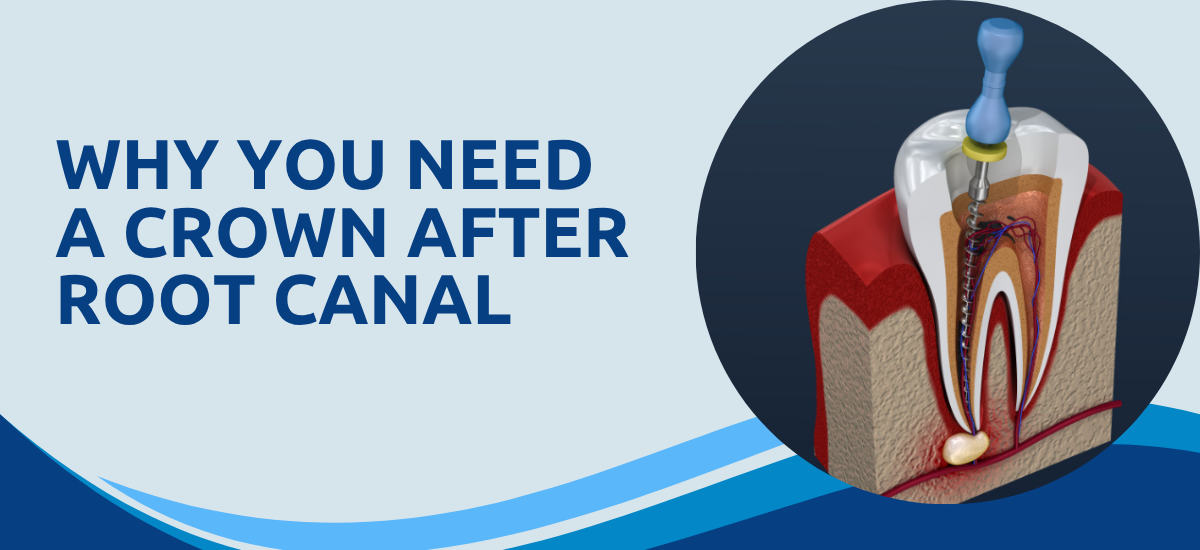
A crown is needed after a root canal to strengthen, protect, and restore the tooth, because removing the inner pulp leaves it brittle and prone to fracture under chewing pressure. Without a crown, treated teeth are significantly more likely to crack, get reinfected, and require extraction within a few years. The root canal seals the infection. The crown keeps the tooth alive in your mouth.
According to Dr. M. Phani Babu, root canal treatment in Adyar, A treated tooth without a crown is a ticking clock, the dentine becomes brittle within months and the next hard bite is usually the one that splits it.
Worried your treated tooth feels fine and doesn’t need capping?
What Actually Happens to a Tooth After Root Canal Treatment?
The pulp tissue is gone. With it goes the tooth’s blood supply, its nerve feedback, and the moisture that kept the dentine flexible. What’s left behind is a shell that looks normal but doesn’t behave like one.
- Brittle dentine: Once the pulp is removed the tooth dries out from the inside, and dry dentine cracks under loads it used to absorb without complaint.
- Lost structure: Decay removal, access cavity, and canal shaping eat into the tooth, so what remains is often a thin ring of wall around a filled core.
- No pain signal: The nerve is dead, which means a hairline fracture won’t hurt and you won’t know it’s there until it splits the root.
- Flex and leak: Cusps that used to flex together now flex apart on every bite, pumping saliva and bacteria back into the canal seal you just paid for.
Most molars also need dental implant in Adyar backup planning if the tooth eventually fractures below the gumline, because once that happens, saving the tooth isn’t on the table anymore.
What Happens If You Skip the Crown After Root Canal?
Patients usually skip it for two reasons. Cost. Or because the tooth feels fine. Both reasons run out of road inside a year or two.
- Vertical root fracture: This is the failure mode dentists worry about most, and once a root splits lengthwise the tooth has to come out, no exceptions.
- Reinfection through coronal leakage: because the temporary filling on top of your root canal isn’t sealed for long-term use and bacteria slowly seep down into the canals you just cleaned, often forcing a far more expensive wisdom tooth removal style extraction or implant rebuild.
- Cusp shear: A single piece of supari or a hard chapati crust is enough to shear off a cusp on an uncrowned molar, and you walk in next morning with half a tooth in a tissue.
- Discolouration: Non-vital teeth darken from the inside out, which is cosmetic if it’s a back tooth but a real problem if it’s anywhere you can see when you smile.
The studies are pretty consistent. Crowned root-canalled teeth survive roughly 6 times longer than uncrowned ones over a 10-year window. Skipping the crown isn’t saving money. It’s deferring a much bigger bill.
You can read more on what we cover in our guide to root canal aftercare and recovery.
Why Choose Dr. M. Phani Babu?
Dr. M. Phani Babu is a Gold Medallist BDS, MDS dental surgeon with over 18 years of clinical experience and 60,000+ patients treated, leading Dent Eazee Speciality Dental Centre as chief dentist in Adyar. His work in restorative and endodontic care covers full-mouth rehabilitations, crown work after RCT, and complex pediatric general anaesthesia cases.
Patients come back because the restoration plan is built around the tooth they have, not a template. Crown material, bite alignment, and post-and-core decisions are made tooth by tooth, with digital imaging and bite analysis before anything is cemented. No guesswork. No upselling.
FAQ
How long can I wait for a crown after root canal?
Two to four weeks is the safe window, beyond that fracture risk climbs sharply.
Do front teeth always need a crown after root canal?
Not always, intact front teeth with small access cavities can be restored with composite alone.
Will the crown feel like a real tooth?
Yes, a properly fitted crown feels normal within a few days of cementation.
Can a crowned tooth still get decay?
Yes, decay starts at the crown margin if hygiene slips, so brushing and flossing stay essential.
Refrences
- National Center for Biotechnology Information – Survival of endodontically treated teeth with and without crown coverage
- American Association of Endodontists – Endodontic outcomes and restoration of treated teeth