
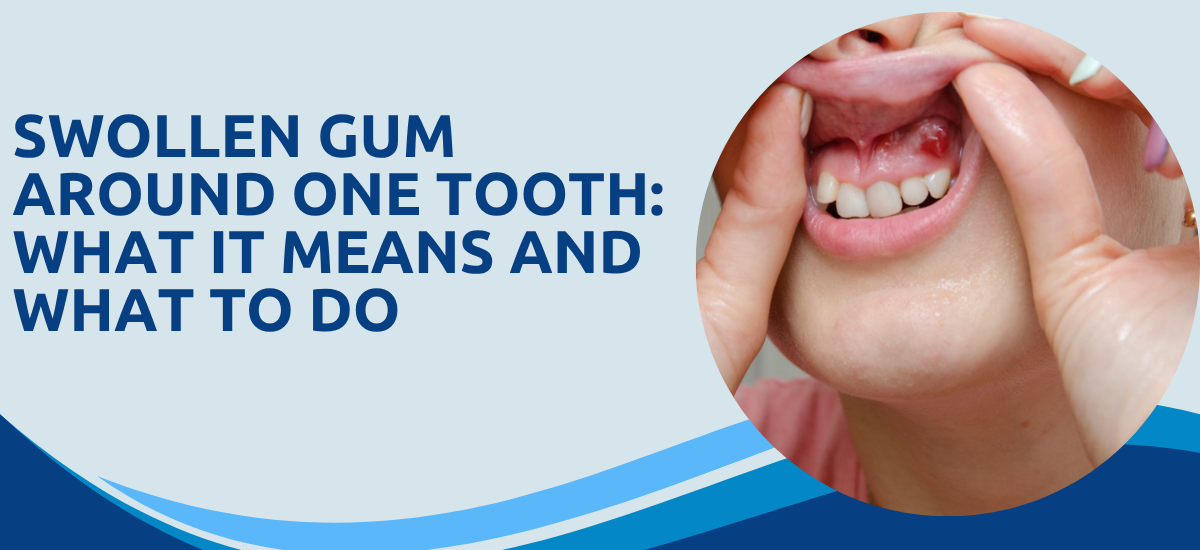
Most people assume swollen gums mean they have not been brushing well enough. They rinse with saltwater for a few days, hope it settles, and move on. Sometimes it does settle. But when the swelling is around just one specific tooth and not the rest, that changes things.
One tooth with a swollen gum around it is almost never a coincidence. Something is happening at that specific site. It could be an infection, a crack, trapped food that has been there longer than you realise, or a problem developing below the gumline that you cannot see or feel yet.
I am Dr. Phani Babu and I practise at Dent Eazee, a dental clinic in Adyar with 25 years of clinical experience. Here is what that swelling is trying to tell you.

What Is Root Canal Treatment and Why Is It Needed
Inside every tooth is a soft tissue called the pulp. It contains nerves and blood vessels. When a cavity is left untreated for too long, bacteria reach the pulp and infect it. That infection is what causes the throbbing, waking-you-up-at-night pain that patients describe.
Root canal treatment removes the infected pulp tissue, cleans the canals inside the root, and seals the tooth. The tooth is then restored with a dental crown to protect it. The goal is to save the natural tooth rather than extract it.
When patients say root canal is painful, they are usually remembering the pain of the infection that made it necessary. The treatment resolves that pain.
Why Is the Gum Swollen Around Only One Tooth?
When generalised gum swelling affects the whole mouth, the causes are usually systemic. Medication side effects, nutritional deficiencies, hormonal changes during pregnancy. That kind of swelling is diffuse and widespread.
But when the swelling is localised to one tooth specifically, the cause is almost always local. Something is wrong at that particular site. The gum tissue is reacting to an infection, an irritant, or trauma that is coming from that one tooth or the bone and tissue immediately around it.
The body does not swell randomly. Swelling is an immune response. Around one tooth, it means the immune system is fighting something at that exact location.
Common Causes of Swollen Gum Around One Tooth

A dental abscess is one of the most frequent causes I see. This is a pocket of infection that forms either at the root tip when the nerve inside the tooth is infected, or in the gum tissue itself. An abscess needs treatment promptly. It does not drain and resolve on its own in most cases. It typically requires root canal treatment or drainage, depending on where the infection is.
Gum disease affecting one area is another common cause. Periodontitis, which is infection in the bone and gum tissue around the tooth, can be more advanced in one pocket than in the rest of the mouth. This happens due to bite patterns, a tooth that is slightly out of alignment, or a filling or crown that has an edge catching food.
A cracked tooth often shows no obvious signs on an X-ray but produces swelling because bacteria are entering through the crack and infecting the surrounding tissue. If left untreated, a crack can split the tooth entirely. This is one situation where a dental crown placed at the right time saves the tooth.
Food impaction, which is food getting trapped between two teeth repeatedly and pushing into the gum tissue, causes inflammation that looks and feels exactly like an infection at first. It is more common with wisdom teeth and teeth where the contact point between them has shifted.
A partially erupted wisdom tooth is one of the most common culprits I see in patients in their 20s and early 30s. The gum flap over an erupting wisdom tooth traps food and bacteria underneath it consistently. This is called pericoronitis and it keeps recurring until the tooth is properly evaluated and often removed.
Signs That Need Immediate Attention
Mild swelling that appeared yesterday and is not worsening is one thing. These signs are different and require a visit without delay:
- Swelling that is spreading into the cheek, jaw, or under the chin.
- A pimple-like bump on the gum that keeps refilling after you press it.
- Fever alongside gum swelling around one tooth.
- Difficulty opening your mouth fully or swallowing comfortably.
- Throbbing pain that worsens at night or when you lie down.
- A bad taste in your mouth that does not go away after rinsing.
Spreading swelling into the jaw or difficulty swallowing are particularly urgent. These can indicate that an infection has moved beyond the tooth into deeper tissue spaces and needs immediate attention.
What You Can Do at Home for Temporary Relief
Home remedies do not treat the underlying cause. They manage discomfort while you get to the clinic. That distinction matters. None of the following will resolve an abscess or stop an infection.
- Rinse gently with warm salt water two to three times a day. This reduces surface bacterial load and helps with comfort, not cure.
- Take ibuprofen if you have no contraindications. It reduces both pain and inflammation. Do not place aspirin directly on the gum tissue as it causes chemical burns.
- Use a soft toothbrush around the area. Avoiding the swollen spot entirely allows more bacteria to accumulate there.
- Avoid very hot food and drinks on that side. Heat increases blood flow and can worsen swelling temporarily.
- Do not apply pressure or try to drain any swelling yourself.
If you have been managing with home remedies for more than two days and nothing is improving, the infection is not going to clear without clinical treatment.
What a Dentist Will Check During Diagnosis
When you come in with a swollen gum around one tooth, I do not just look at the gum. I look at everything contributing to that area.
I will examine the tooth for cracks, check the bite, probe the gum pocket around the affected tooth to measure how deep the inflammation goes, and take an X-ray to assess the bone and root tip. Sometimes the source of the swelling is not the tooth closest to the swelling but the one next to it.
A cold test tells me whether the nerve inside the tooth is still vital or whether it has been compromised. The combination of clinical findings and the X-ray together determines what the right treatment is. I will not recommend a root canal if a cleaning and gum treatment can resolve it, and I will not suggest gum treatment if what is actually needed is root canal.
Best Treatment Options for Swollen Gum Around One Tooth
If the cause is a dental abscess involving the nerve, root canal treatment removes the infected tissue and eliminates the source of the swelling. The gum inflammation settles within a few days of the infection being cleared.
If the cause is localised gum disease, a deep cleaning procedure called scaling and root planing clears the bacterial deposits below the gumline. In more advanced cases, laser gum surgery or flap surgery may be needed to clean the pocket properly and allow the tissue to reattach.
If the cause is a cracked tooth, a crown protects the tooth from further damage and stops bacteria from entering the crack. If the crack has already reached the nerve, root canal treatment comes first.
If a partially erupted wisdom tooth is responsible, the gum flap can be removed surgically in some cases. More often, the most predictable solution is removing the wisdom tooth entirely to prevent repeated episodes.
How to Prevent Gum Swelling in the Future
- Visit a dentist every six months. Many of the conditions that cause localised gum swelling are detectable before swelling actually develops.
- Floss daily. Gum pockets that trap food consistently are the starting point for most localised gum infections.
- Replace old fillings that have cracked edges. A rough filling edge catches food in the same spot every single time you eat.
- Do not ignore a cracked tooth. It will not heal on its own and it will not stay cracked at the same size indefinitely.
- Get wisdom teeth evaluated early. If they are partially erupted and causing repeated swelling, waiting does not make the situation better. Read more about wisdom tooth removal at Dent Eazee.
When to Visit Dr. Phani Babu in Adyar

If the gum around one tooth has been swollen for more than two days, or if any of the warning signs above apply, come in. At Dent Eazee Dental Clinic in Adyar, we see patients seven days a week from 10AM to 9PM. You do not need to wait for a weekday appointment.
In 25 years of practice I have seen gum swellings that were simple to treat in one visit and I have seen infections that had been left for weeks and required surgical management. The difference between those outcomes is almost always just time. The earlier you come in, the simpler and less expensive the treatment is.
A swollen gum around one tooth deserves more than saltwater and hope.
FAQ
Can a swollen gum around one tooth go away on its own?
Mild inflammation from food trapping may settle, but a swelling caused by infection will not resolve without treatment.
How do I know if my swollen gum is an abscess?
A pimple-like bump on the gum, throbbing pain, bad taste, or fever alongside the swelling strongly suggests an abscess.
Is a swollen gum around one tooth a dental emergency?
Yes, if there is spreading swelling, fever, or difficulty swallowing, it should be treated as an emergency without delay.
Can a swollen gum be caused by a tooth that looks fine?
Yes, a cracked tooth or a root tip infection can cause gum swelling while the tooth itself looks completely normal on the surface.
Will antibiotics fix a swollen gum?
Antibiotics reduce infection temporarily but do not remove the source, so the swelling returns once the course finishes.
How long does it take for gum swelling to go down after treatment?
Most patients see noticeable improvement within 48 to 72 hours of the underlying cause being properly treated.
Can children get swollen gum around one tooth?
Yes, children with infected baby teeth or erupting permanent teeth can develop localised gum swelling that needs clinical evaluation.