
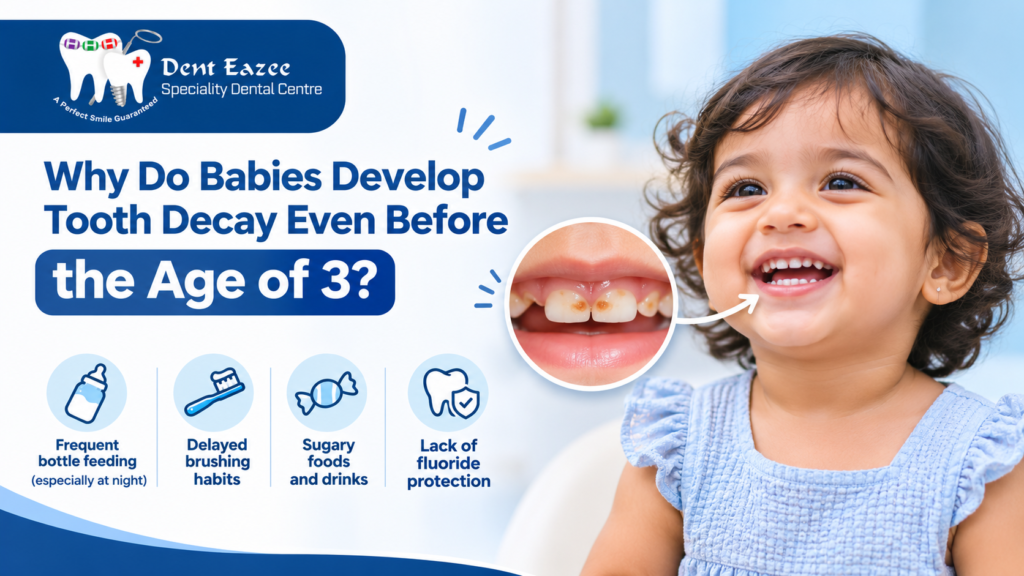
Many parents are surprised when they notice cavities in their baby’s teeth, especially when their child is just one or two years old. There is a common misconception that tooth decay occurs only in older children who frequently consume chocolates and sweets.
However, tooth decay can begin as soon as a baby’s first tooth appears. This condition is known as Early Childhood Caries (ECC).
Understanding its causes and seeking timely baby tooth decay treatment in Adyar can help parents protect their child’s developing teeth.
What Is Early Childhood Caries?
Early Childhood Caries refers to tooth decay affecting the milk teeth of children below six years of age.
It often begins with small white spots near the gumline, particularly on the upper front teeth. If left untreated, these spots can develop into brown or black cavities, eventually causing pain and infection.
Since milk teeth have thinner enamel than permanent teeth, decay can progress relatively quickly.
Why Do Babies Develop Tooth Decay at Such a Young Age?
- Frequent Nighttime Bottle Feeding
Allowing babies to fall asleep with a feeding bottle containing milk, formula or sweetened drinks can increase the risk of tooth decay.
Saliva production decreases during sleep, allowing sugars to remain in contact with the teeth for longer periods. This creates an environment where cavity-causing bacteria can thrive.
- Delayed Brushing Habits
Many parents wait until several milk teeth have appeared before introducing brushing.
However, oral hygiene should begin as soon as the first tooth appears. Without regular cleaning, plaque and bacteria can accumulate on the tooth surface and increase the risk of decay.
- Frequent Consumption of Sugary Foods
Packaged fruit juices, biscuits, sweetened cereals and flavoured milk may contain significant amounts of sugar.
Frequent consumption of these foods and drinks exposes developing teeth to repeated acid attacks, increasing the likelihood of cavities.
- Insufficient Fluoride Exposure
Fluoride helps strengthen tooth enamel and protect teeth against decay.
Using an age-appropriate amount of fluoride toothpaste from the time the first tooth appears can help protect milk teeth from cavities.
- Delayed Dental Check-ups
Many parents visit a dentist only when their child experiences pain or develops visible cavities.
An early visit to a pediatric dentist in Adyar can help identify initial signs of tooth decay before they progress into more serious dental problems.
Early Signs of Tooth Decay in Babies
Babies and toddlers may not be able to communicate dental discomfort. Parents should look out for:
- Chalky white spots near the gumline.
- Yellow, brown or black marks on teeth.
- Visible holes in milk teeth.
- Unusual crying or discomfort while eating.
- Refusal to eat certain foods.
- Swelling around the gums.
If you notice any of these signs, consulting a child dental specialist in Adyar can help identify the problem at an early stage.
What Happens If Tooth Decay in Babies Is Left Untreated?
Milk teeth are important for chewing, speech development and maintaining space for permanent teeth.
Untreated tooth decay in babies can result in:
- Dental pain and infection.
- Difficulty eating and sleeping.
- Premature loss of milk teeth.
- Potential damage to developing permanent teeth.
- Space and alignment problems when permanent teeth emerge.
Timely baby teeth treatment can help prevent these complications and preserve the child’s natural teeth wherever possible.
How Is Baby Tooth Decay Treated?
Treatment depends on the child’s age, the severity of tooth decay and the condition of the affected teeth.
A pediatric dentist may recommend:
- Fluoride varnish for early-stage tooth decay.
- Silver diamine fluoride to arrest suitable cavities.
- Dental fillings to restore damaged teeth.
- Pulp therapy when decay affects the inner portion of the tooth.
- Pediatric dental crowns for extensively damaged teeth.
- Tooth extraction when the affected tooth cannot be preserved.
Parents looking for baby teeth treatment in Adyar should seek a specialist consultation to understand which treatment is appropriate for their child.
How Can Parents Prevent Tooth Decay Before the Age of 3?
A few simple practices can help protect your baby’s teeth:
- Start brushing as soon as the first tooth appears.
- Brush twice daily using a rice-grain-sized smear of fluoride toothpaste for children under three.
- Avoid allowing babies to fall asleep with a feeding bottle in their mouth.
- Limit sugary foods and drinks.
- Avoid adding sugar to feeding bottles.
- Schedule the first dental visit by the child’s first birthday.
- Follow the dentist’s recommendations for regular dental check-ups.
Establishing these habits during infancy can help reduce the risk of dental problems as your child grows.
Baby Tooth Decay Treatment in Adyar at Dent Eazee
At Dent Eazee Speciality Dental Centre, Adyar, pediatric dental care focuses on early diagnosis, preventive dentistry and preserving natural teeth wherever possible.
Dr. M. Phani Babu, a specialist with an MDS in Paedodontics and Preventive Dentistry, has extensive clinical experience in managing dental conditions in infants, toddlers and older children.
From early childhood tooth decay to advanced kids cavity treatment in Adyar, treatment plans are developed based on the child’s age, dental development and individual oral health requirements.
Frequently Asked Questions
- Can a one-year-old baby develop cavities?
Yes. Tooth decay can develop as soon as the first milk tooth appears.
- Can early tooth decay in babies be reversed?
Early enamel damage may be reversed through appropriate fluoride treatment and improved oral hygiene. However, established cavities require professional assessment and management.
- Is it necessary to treat cavities in milk teeth?
Yes. Untreated cavities can cause pain, infection, difficulty eating and premature loss of milk teeth.
- Can a two-year-old child undergo dental treatment?
Yes. A pediatric dentist can assess and recommend suitable treatment based on the child’s age, dental condition and ability to cooperate.
- When should I consult a milk tooth dentist in Adyar?
Parents should schedule their child’s first dental examination by their first birthday and seek prompt attention if they notice signs of tooth decay.
Protect Your Baby’s Smile From the Beginning
Tooth decay does not have to wait until your child grows older, and neither should dental care. Early preventive care, healthy feeding habits and regular dental examinations can help protect your child’s developing teeth.
If you are looking for baby tooth decay treatment in Adyar, consult the pediatric dental team at Dent Eazee Speciality Dental Centre.