
A father came in last year with his 14-year-old daughter. She had crowded upper teeth, a slightly open bite, and had been self-conscious about it for two years. He had already visited two clinics before coming to Dent Eazee. At the first clinic he was quoted one figure. At the second, the same treatment was quoted at nearly double. No explanation for the difference. Just two very different numbers on two pieces of paper.
He came to me asking one straightforward question: what is the actual cost and why does it vary so much?
I am Dr. Phani Babu, and I have been practising at Dent Eazee, a dental clinic in Adyar, Chennai for 25 years. Braces cost in Chennai genuinely varies for real clinical reasons. But it also varies for reasons that have nothing to do with the quality of treatment. This blog explains both.
Why Braces Cost Is the First Thing Everyone Asks
Orthodontic treatment is not a one-appointment procedure. It runs for one to three years. It requires monthly or bi-monthly visits. It uses specific materials and laboratory work. And for families in Chennai, it is often the single most expensive dental treatment they will consider for a child.
So cost matters. Asking about it before committing is entirely sensible. What is less sensible is making the decision based purely on the lowest number without understanding what that number does and does not include.
I have seen patients who went elsewhere for cheaper treatment and came to me two years later with braces that were not achieving the expected result, with teeth that had relapsed after premature removal, or with significant enamel demineralisation from poor oral hygiene guidance during treatment. The cost of fixing those outcomes exceeded what they saved on the initial treatment. Every single time.
Types of Braces Available in Chennai
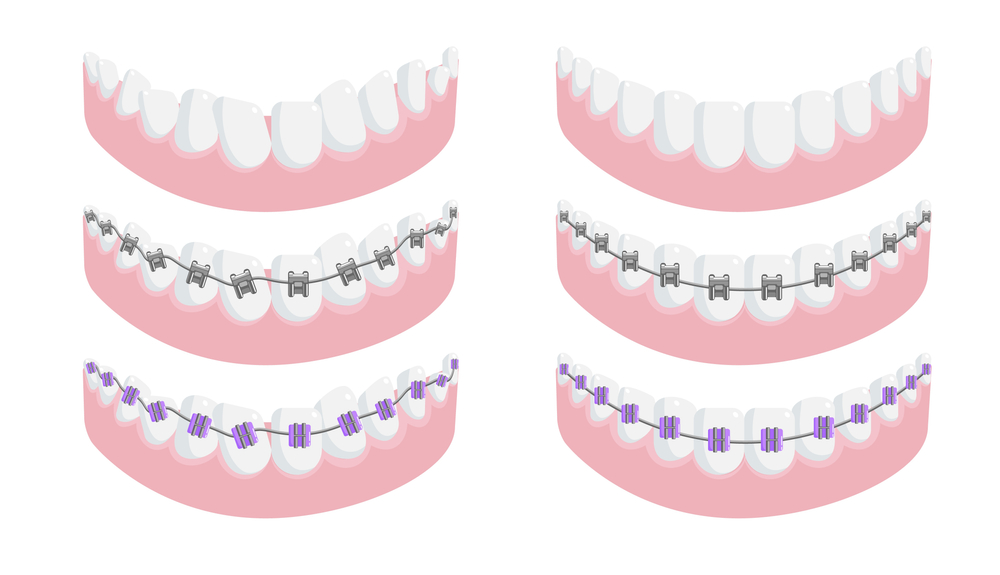
Metal braces are the most established option and in most clinical situations, still the most effective. They are fixed to the teeth and work continuously. Metal braces in Adyar are the starting point for patients with moderate to severe crowding, significant bite problems, or cases that require precise control of tooth movement in three dimensions.
Ceramic braces work on the same mechanical principle as metal braces but use tooth-coloured or clear brackets. Less visible, slightly more expensive, and require a bit more care to avoid staining the brackets with food and drink. Popular with older teenagers and adults who want a less noticeable appliance without switching to aligners.
Invisalign and clear aligners are removable trays changed every one to two weeks. Invisalign treatment in Adyar is suitable for mild to moderate alignment issues and works well for adults with busy professional lives who do not want visible braces. The critical requirement is discipline: aligners must be worn 20 to 22 hours daily. Patients who remove them too often see slow or incomplete results.
For younger children between six and ten, Invisalign First is a paediatric aligner system designed specifically for the mixed dentition stage when baby and permanent teeth are both present. Early treatment during this window can address jaw development, not just tooth alignment, and sometimes reduces the complexity of treatment needed later.
Lingual braces are fixed to the back of the teeth and completely invisible from the front. They are the most technically demanding appliance to place and adjust, and priced accordingly. Not every orthodontic case is suitable for them. If you are considering this option, look at the full range of aligner and brace options and discuss with your dentist whether lingual braces are appropriate for your specific case.
Not sure which type of braces is right for you or your child? A consultation at Dent Eazee, Adyar takes 30 minutes and gives you a clear recommendation based on your actual teeth, not a standard package.
What Actually Determines the Final Cost
The type of appliance is the most obvious cost factor but it is not the only one. Here is what else goes into the final figure.
Severity of the case matters significantly. A patient with mild crowding and well-positioned teeth needs less wire adjustment, fewer appointments, and a shorter treatment duration than a patient with a severe overbite or a skeletal discrepancy. Same type of braces, different complexity, different cost.
Whether extractions are needed changes the treatment picture. Some cases require one or more teeth to be removed before braces can create the space needed for proper alignment. Extraction cases take longer and require more precise management of tooth movement.
The condition of the teeth before treatment starts. If there are cavities to be treated or early gum disease to be managed before brackets go on, that is work that precedes the orthodontic treatment and adds to the overall investment.
Treatment duration directly affects cost in most pricing structures. An 18-month case and a 30-month case involve a different number of clinical visits, different quantities of materials, and different levels of ongoing monitoring. When a clinic quotes a flat fee, ask whether it covers the full duration regardless of how long treatment takes.
The experience and training of the treating dentist is a cost factor that patients rarely think about explicitly but that matters enormously for outcome quality. Orthodontic treatment is a long-term commitment. The person managing your case needs to understand not just how to place brackets but how to plan and sequence tooth movement to achieve a stable, functional result.
The Costs Most Patients Do Not Expect

Several costs come up during or after braces that patients are often not warned about upfront. I think they should be.
- Retainers after braces: teeth move back without retention. Always. A retainer, whether fixed or removable, is part of every orthodontic outcome and has its own cost. Ask about it before you start.
- Broken bracket repairs: a bracket that detaches and needs re-bonding during treatment is usually a routine visit. If it happens repeatedly due to non-compliance with dietary restrictions, some clinics charge for additional repairs.
- Additional cosmetic work after alignment: once teeth are straight, patients sometimes want cosmetic improvements like whitening or minor reshaping of uneven edges. These are separate from the orthodontic treatment.
- X-rays and records: a proper orthodontic assessment requires full mouth X-rays and sometimes a cephalometric X-ray for bite analysis. These diagnostic records are necessary and should be factored in from the start.
- Treatment prolongation: cases that run longer than estimated because of missed appointments, compliance issues, or unexpected tooth movement may incur additional charges with some providers. Clarify this in advance.
Children vs Adults: Does Age Change the Price?
This is a question I get regularly, and the answer is yes, but not in the way most people assume.
Treatment for children is often simpler and faster than the same treatment started in adulthood. Bone in younger patients is more responsive to orthodontic forces. Teeth move faster. Cases that would take two years in an adult can sometimes be completed in 14 to 16 months in a 12-year-old. Shorter treatment often means lower cost.
The other factor is that children treated at the right developmental stage sometimes avoid the need for more complex intervention later. A child whose jaw development is guided early with an appliance like Invisalign First may not need the same degree of orthodontic correction as a teenager. Early treatment costs money. Not treating early sometimes costs more later.
Adults can absolutely have successful orthodontic treatment. The biology is the same, just slower. Adults with significant misalignment sometimes also need to consider whether dental crowns or restorative work will be needed alongside alignment, particularly if teeth are worn or damaged from years of a misaligned bite. This integration of restorative and orthodontic planning is something I always assess before recommending a treatment path.
Considering braces for yourself or your child? Dent Eazee in Adyar offers a thorough orthodontic assessment so you know exactly what is involved before committing to anything.
How Long Treatment Takes and Why It Matters for Cost
Treatment duration is probably the most underappreciated cost driver in orthodontics.
Simple alignment cases can be complete in 10 to 12 months. Moderate cases typically run 18 to 24 months. Complex cases involving significant bite correction, jaw discrepancies, or surgical orthodontics can run longer. These are not arbitrary timelines. They reflect the biology of how bone remodels in response to sustained gentle force.
Rushing orthodontic treatment produces unstable results. I have seen patients who came to me after braces that were removed too early, with teeth that had moved back toward their original positions within months. Re-treatment is far more demoralising and expensive than doing it properly the first time.
The thing patients rarely consider when comparing quotes is whether both quotes cover the same treatment duration. A lower flat fee might assume a shorter treatment plan that is not actually appropriate for the case. Ask directly: what happens if treatment takes longer than planned, and is there an additional cost?
What to Ask Before You Commit to Any Braces Treatment
These are the questions I would ask if I were a patient sitting across from an orthodontist in Chennai.
- What does the quoted cost include exactly: brackets, wires, all clinic visits, retainers, and X-rays, or just some of these?
- What is the estimated treatment duration for my specific case, not a general range?
- What type of appliance is being recommended and why is it the right choice for my teeth, not just the standard offering?
- What happens if my teeth do not respond as expected and treatment takes longer?
- What are the retainer options after treatment and what do they cost?
- Are there any preparatory treatments, extractions, fillings, or gum work, that need to happen before braces can start?
A dentist who cannot or will not answer these questions clearly before you commit is one I would be cautious about. Good orthodontic planning is transparent planning.
Why Choose Dr. Phani Babu at Dent Eazee for Braces in Adyar
At Dent Eazee in Adyar, every orthodontic case starts with a proper clinical assessment. I examine the teeth, the bite, the jaw relationship, and the facial structure before recommending anything. A teenager with mild crowding and good jaw alignment needs a different approach to a teenager with the same crowding and an underdeveloped upper jaw. Treating them the same way is not good orthodontics.
I hold a Gold Medal in MDS and have 25 years of clinical practice. I offer metal braces, ceramic braces, Invisalign for adults, and Invisalign First for children. The recommendation I make is based on what is clinically appropriate for the case, not on which option has the better margin.
For patients who want to understand all their options side by side, including how braces compare to aligners for their specific situation, I go through that in detail at the consultation. No patient should leave a first appointment without understanding why a particular treatment is being recommended and what the realistic timeline and cost looks like.
We are open seven days a week at Dent Eazee, including Sundays, from 10AM to 9PM. For working parents bringing children for orthodontic consultations, not having to rearrange a work day to make a weekday appointment matters.
Frequently Asked Questions
How long do braces take to straighten teeth?
Most cases take between 12 and 24 months depending on the severity of misalignment and the type of appliance used.
Are metal braces better than Invisalign?
Metal braces offer more precise control for complex cases; Invisalign is better suited to mild to moderate alignment issues in motivated adults.
At what age should a child get braces?
Most orthodontic treatment begins between 11 and 14 when permanent teeth have erupted; early intervention with appliances like Invisalign First can start from age six.
Do braces hurt?
Some discomfort for two to three days after each adjustment is normal; the brackets themselves do not cause ongoing pain once patients adjust to them.
Can adults get braces?
Yes, adults can have highly successful orthodontic treatment; treatment may take slightly longer than for younger patients but outcomes are comparable.
Will I need a retainer after braces?
Yes, retainers are always required after braces to maintain the corrected position; teeth will move back without retention.
Is Invisalign more expensive than braces in Chennai?
Invisalign is generally priced higher than metal braces; the cost difference varies based on case complexity and the specific treatment plan.
Stop comparing numbers without context. Come in to Dent Eazee, Adyar for a proper orthodontic assessment, get a clear treatment plan, and understand exactly what you are paying for before you decide.