

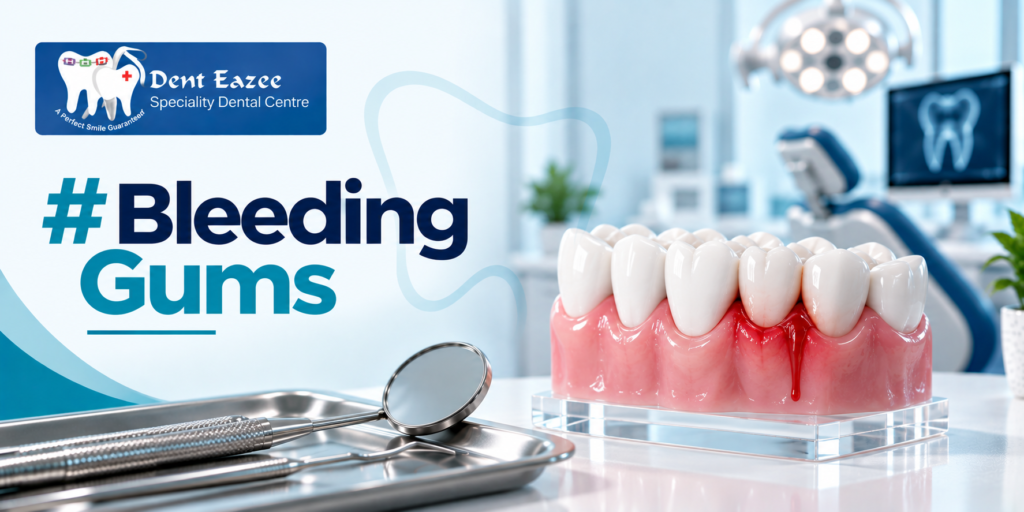
“Why do my gums bleed when I brush?” is one of the most commonly searched dental questions online — and one of the most frequently ignored symptoms in real life. Many people notice a little blood in the sink, assume it’s normal, and brush a bit softer next time. In reality, bleeding gums are almost always a sign that something needs attention. Here’s what’s actually going on, and how Dent Eazee Dental Clinic, the best dental clinic in Adyar, treats it before it becomes a bigger problem.
Bleeding Gums Are Not Normal — Here’s Why
Healthy gums are firm, pale pink, and don’t bleed during normal brushing or flossing. If you’re seeing blood regularly, it means your gums are inflamed — and inflammation doesn’t happen without a cause. In the vast majority of cases, that cause is plaque and bacteria buildup along the gumline, which triggers your immune system’s inflammatory response, making gum tissue swollen, sensitive, and prone to bleeding.
Gingivitis: The Early Stage
The earliest stage of gum disease is called gingivitis. At this point, gums may be red, swollen, and bleed easily, but the deeper structures supporting your teeth — the bone and ligaments — haven’t been damaged yet. This is genuinely good news: gingivitis is fully reversible with a proper cleaning and improved home care, without any surgical intervention needed.
Periodontitis: When Gingivitis Progresses
Left untreated, gingivitis can advance into periodontitis, a more serious form of gum disease where the infection spreads below the gumline and begins to damage the bone and connective tissue anchoring your teeth. Warning signs of this more advanced stage include:
- Gums pulling away from teeth, making teeth look longer
- Persistent bad breath that doesn’t improve with brushing
- Loose or shifting teeth
- Pus between teeth and gums
- Pain while chewing
Unlike gingivitis, periodontitis is not reversible — but its progression can be stopped and managed with the right treatment, which is why catching it early matters so much.
Other Causes of Bleeding Gums
While gum disease is the most common cause, a few other factors are worth ruling out:
- Brushing too hard or using a hard-bristled toothbrush can irritate healthy gum tissue.
- New flossing habits — gums that aren’t used to being flossed regularly may bleed for the first week or two before adjusting; this typically resolves as gum health improves.
- Vitamin deficiencies, particularly low vitamin C or vitamin K, can weaken gum tissue and increase bleeding tendency.
- Blood-thinning medications or underlying blood clotting conditions can make gums bleed more easily even with mild irritation.
- Hormonal changes, including pregnancy, can temporarily increase gum sensitivity and bleeding.
Why You Shouldn’t Ignore It
Bleeding gums matter beyond your mouth. The gums are a direct entry point for bacteria into your bloodstream — and the more inflamed and bleeding your gums are, the easier it is for that bacteria to enter your system. Research has increasingly linked gum disease to broader health concerns, including cardiovascular issues and complications in patients managing diabetes. Treating bleeding gums early isn’t just about saving your teeth — it supports your overall health too.
How Dent Eazee Treats Bleeding Gums and Gum Disease
Professional cleaning (scaling) removes plaque and tartar buildup above and below the gumline that brushing at home simply can’t reach — often enough to resolve early gingivitis on its own.
Scaling and root planing goes a step further for more advanced cases, cleaning deeper below the gumline and smoothing tooth roots to help gums reattach properly.
Laser gum surgery in Adyar offers a precise, minimally invasive way to treat more advanced periodontal disease, removing infected tissue and promoting faster healing than traditional surgical methods.
Flap surgery may be recommended for deeper gum pockets or more significant bone loss, allowing the dentist to clean below the gumline thoroughly and reposition gum tissue for better long-term attachment.
Bruxism treatment may also be considered, since teeth grinding can worsen gum recession and irritation in some patients.
What You Can Do at Home
- Switch to a soft-bristled toothbrush and use gentle, circular motions rather than aggressive back-and-forth scrubbing.
- Floss daily — consistently, not just when your gums are already bothering you.
- Use an antibacterial or antiseptic mouthwash as directed by your dentist.
- Stay consistent even if gums bleed initially when you resume flossing; this typically improves within one to two weeks as gum health recovers.
- Eat a balanced diet with adequate vitamin C, and stay hydrated.
- Avoid smoking, which significantly worsens gum disease and slows healing.
- Don’t wait for pain — bleeding alone is reason enough to get checked.
When to See a Dentist
Book an appointment if:
- Your gums bleed regularly, not just occasionally after aggressive brushing
- Bleeding is accompanied by swelling, redness, or tenderness
- You notice persistent bad breath alongside the bleeding
- Teeth feel loose or your bite feels different
- It’s been more than six months since your last professional cleaning
Why Dent Eazee Is the Best Dental Clinic in Adyar for Gum Health
Full spectrum of gum treatment, from routine cleanings to advanced laser gum surgery and flap surgery, meaning patients don’t need to be referred elsewhere as their condition progresses.
Early intervention philosophy. The clinic’s preventive approach means minor gum inflammation is caught and treated before it develops into more serious periodontitis.
Experienced specialist team. Backed by Dr. M. Phani Babu’s 18+ years of experience and a wider team that includes periodontal expertise, patients get care matched to the actual severity of their condition.
Whole-health perspective. Given the documented links between gum health and conditions like heart disease and diabetes, the clinic treats gum disease as a health priority, not a cosmetic afterthought.
Trusted reputation. A 4.9-star Google rating reflects the kind of consistent, thorough care that’s made Dent Eazee known as the best dentist in Adyar for gum and periodontal treatment.
Explore more on the Dent Eazee blog, browse the clinic’s full range of services, see results in the photo gallery and video library, read patient testimonials, or check the media page for further coverage.
Frequently Asked Questions
Are bleeding gums always a sign of gum disease? Most often yes, but overly aggressive brushing, new flossing habits, or vitamin deficiencies can also be contributing factors — a dental exam can pinpoint the actual cause.
Can gingivitis be reversed? Yes — with a professional cleaning and consistent home care, gingivitis is fully reversible before it progresses to periodontitis.
Is periodontitis reversible? Not completely, but its progression can be stopped and managed effectively with proper treatment, preventing further bone and tissue loss.
How often should I get a professional cleaning to prevent gum disease? Every six months is standard; patients with a history of gum disease may need more frequent visits.
Can bleeding gums heal on their own without treatment? Mild bleeding from a temporary irritation may resolve on its own, but persistent bleeding almost always requires a professional cleaning to actually resolve the underlying cause.
Final Thoughts
Bleeding gums are a warning sign worth listening to, not a minor inconvenience to brush past. Caught early, gum disease is entirely manageable — and often fully reversible.
Noticing blood when you brush? Contact Dent Eazee Dental Clinic today to book a gum health assessment with Adyar’s trusted dental team.