
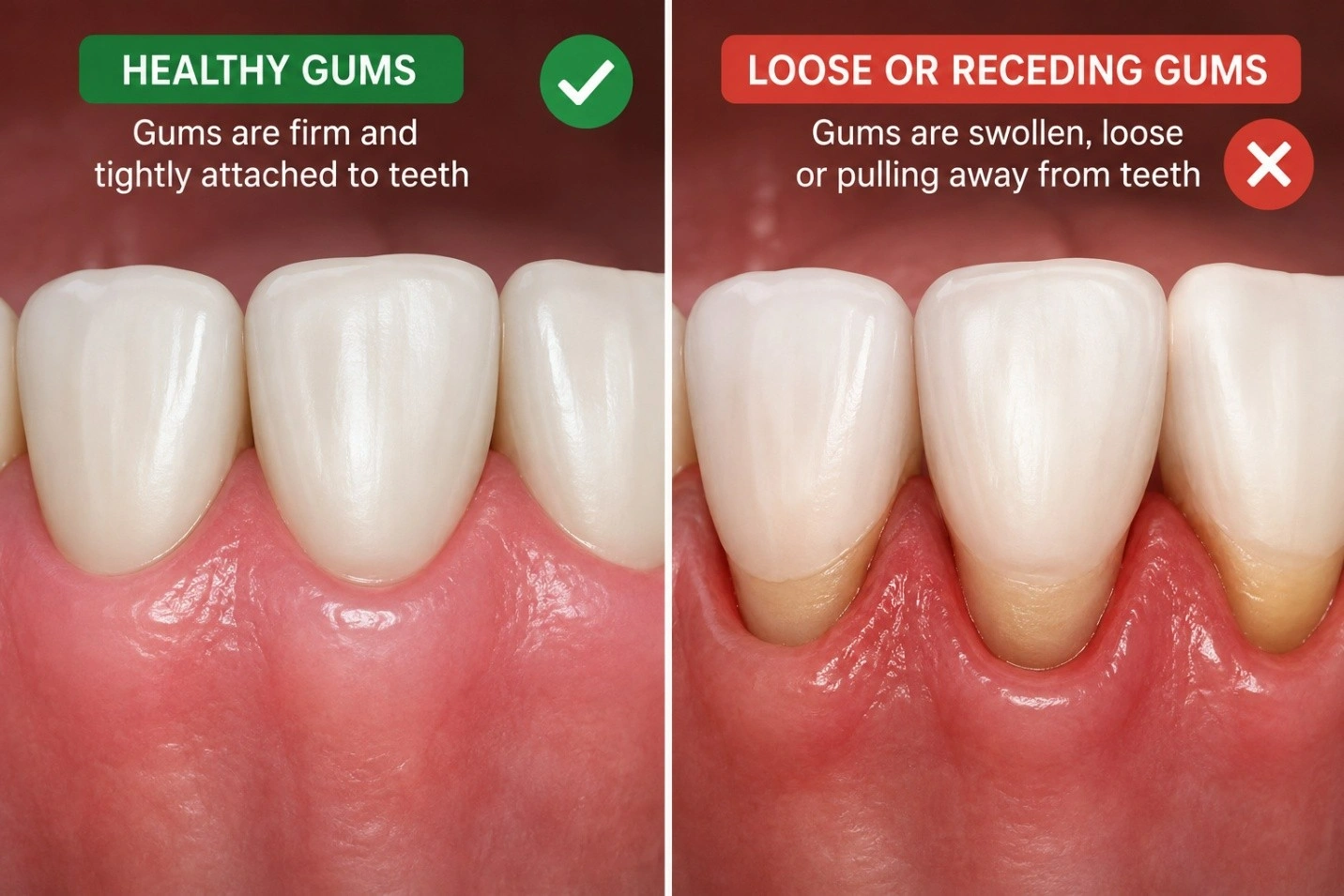
Healthy gums form a protective seal around the teeth, helping support them and preventing bacteria from affecting deeper tissues. When this seal weakens, the gums may begin to pull away from the teeth, creating spaces where plaque and bacteria can accumulate.
Loose gums around teeth can develop due to gum infection, gum recession, poor oral hygiene, or damage to the tissues supporting the teeth. If left untreated, the condition may lead to tooth sensitivity, bleeding gums, bad breath, and tooth mobility.
Visiting a dental clinic in Adyar for an early evaluation can help identify the underlying cause of loose gums. An experienced dentist in Adyar can recommend appropriate treatment and preventive care to restore gum health and protect your teeth.
Common Causes of Loose Gums
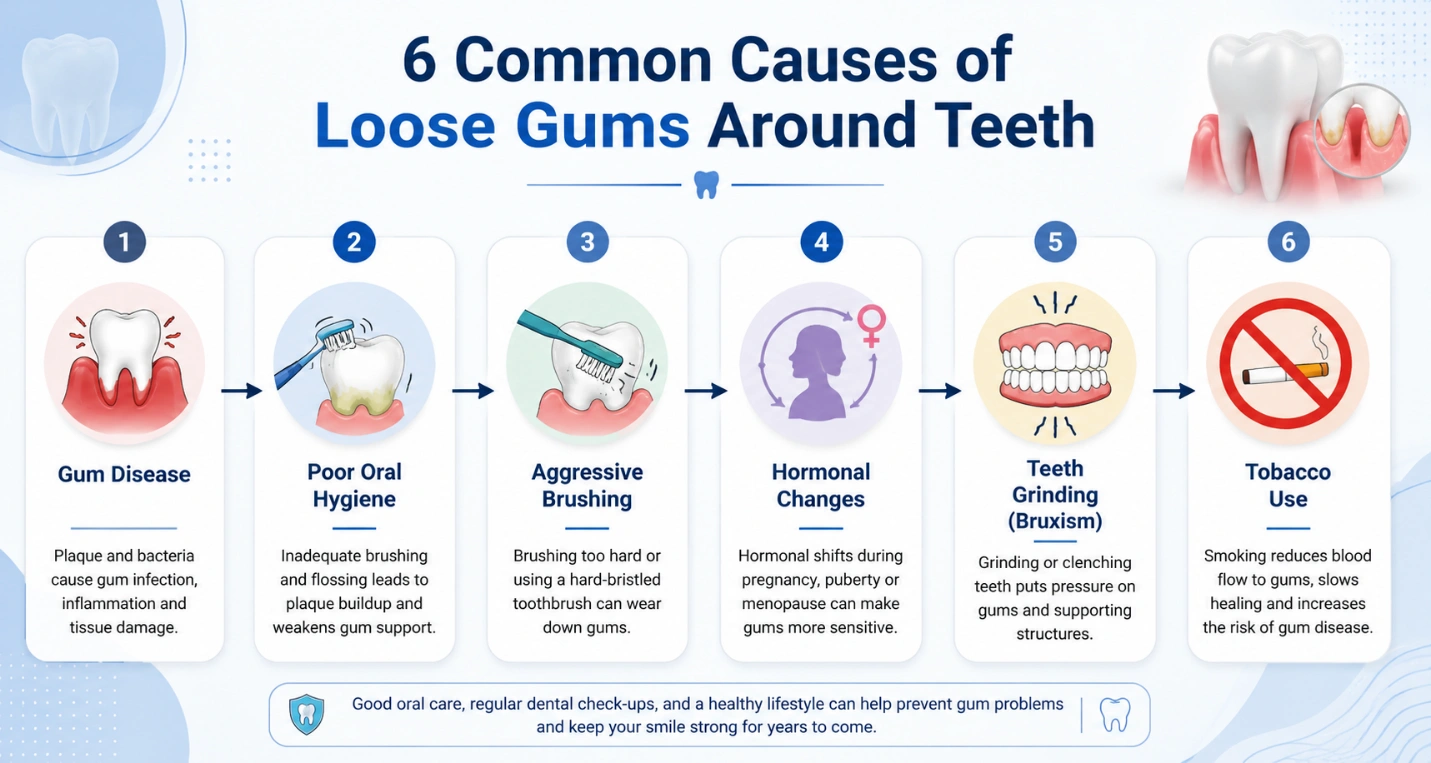
Several factors can cause loose gums around teeth. Identifying the underlying cause helps your dentist recommend the most effective treatment.
- Gum Disease (Periodontal Disease)
Plaque buildup can lead to gum infection, causing inflammation, bleeding, gum recession, and loose gums if left untreated.
- Poor Oral Hygiene
Inadequate brushing and flossing allow plaque and bacteria to accumulate, increasing the risk of gum disease and weakening gum support.
- Aggressive Brushing
Brushing too hard or using a hard-bristled toothbrush can damage gum tissue, leading to gum recession and sensitivity.
- Hormonal Changes
Pregnancy, puberty, and menopause can make gums more sensitive, increasing the risk of inflammation and gum problems.
- Teeth Grinding (Bruxism)
Constant grinding or clenching places excessive pressure on teeth and gums, affecting their long-term stability.
- Smoking and Tobacco Use
Smoking reduces blood flow to the gums, delays healing, and significantly increases the risk of gum disease and loose gums.
What Are the Symptoms of Loose Gums?
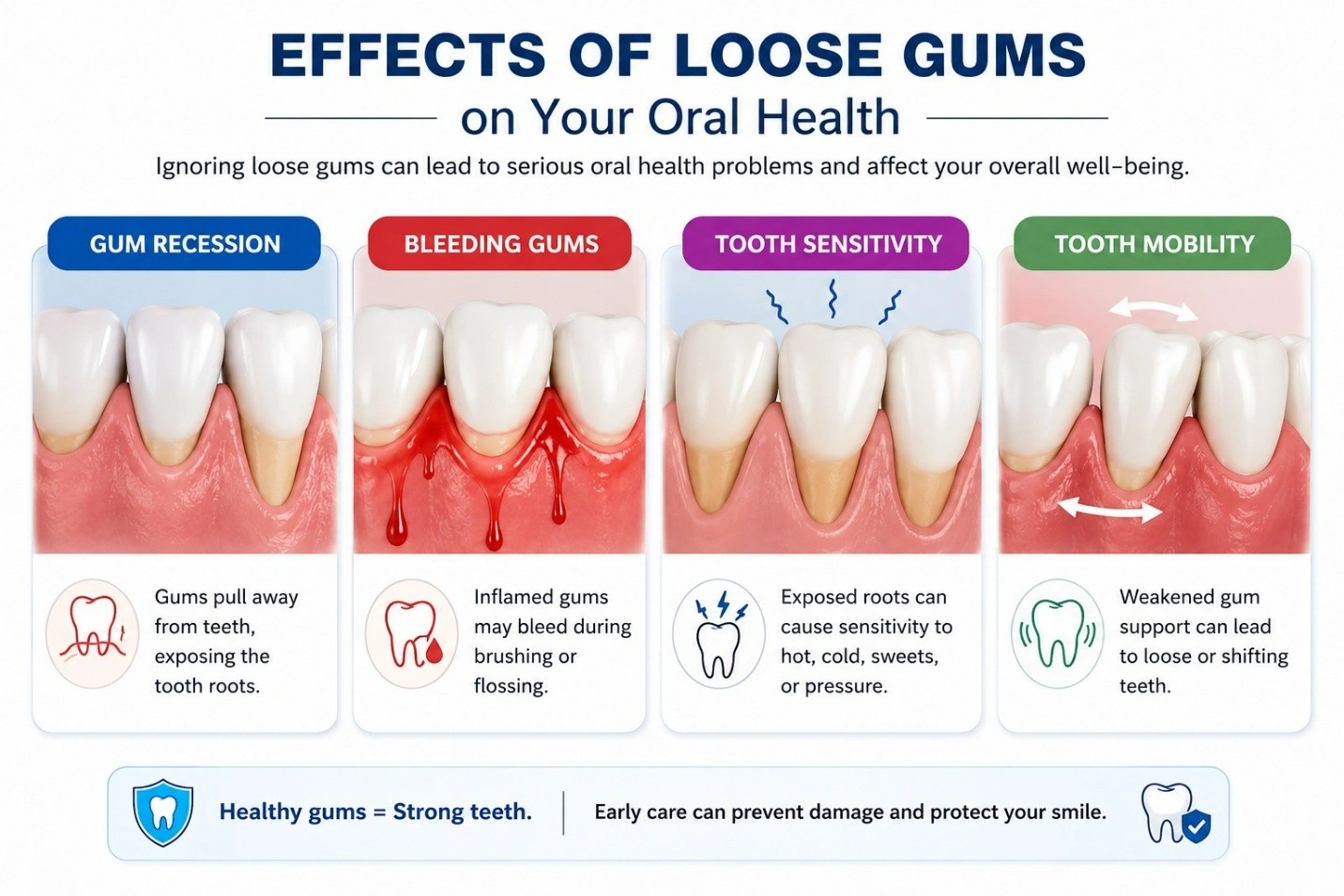
Recognizing early signs of gum problems can help prevent further damage. Symptoms of loose gums around teeth may include:
- Gums pulling away from the teeth
- Bleeding while brushing or flossing
- Redness or swelling of gums
- Increased tooth sensitivity
- Bad breath that does not improve
- Visible tooth roots
- Teeth feeling loose or unstable
Some people may experience mild symptoms initially, while others may notice changes only when the condition becomes more advanced. Regular dental examinations can help detect gum problems before they become severe.
Can Loose Gums Around Teeth Heal Naturally?
Whether loose gums can improve naturally depends on the cause and severity of the condition.
If gum looseness is caused by mild inflammation due to plaque buildup, improving brushing habits, flossing, and professional cleaning may help restore gum health.
However, damaged gum tissue or advanced gum disease usually requires professional dental treatment. Gum tissue that has significantly receded does not typically grow back on its own, making early diagnosis important.
How Are Loose Gums Around Teeth Diagnosed?
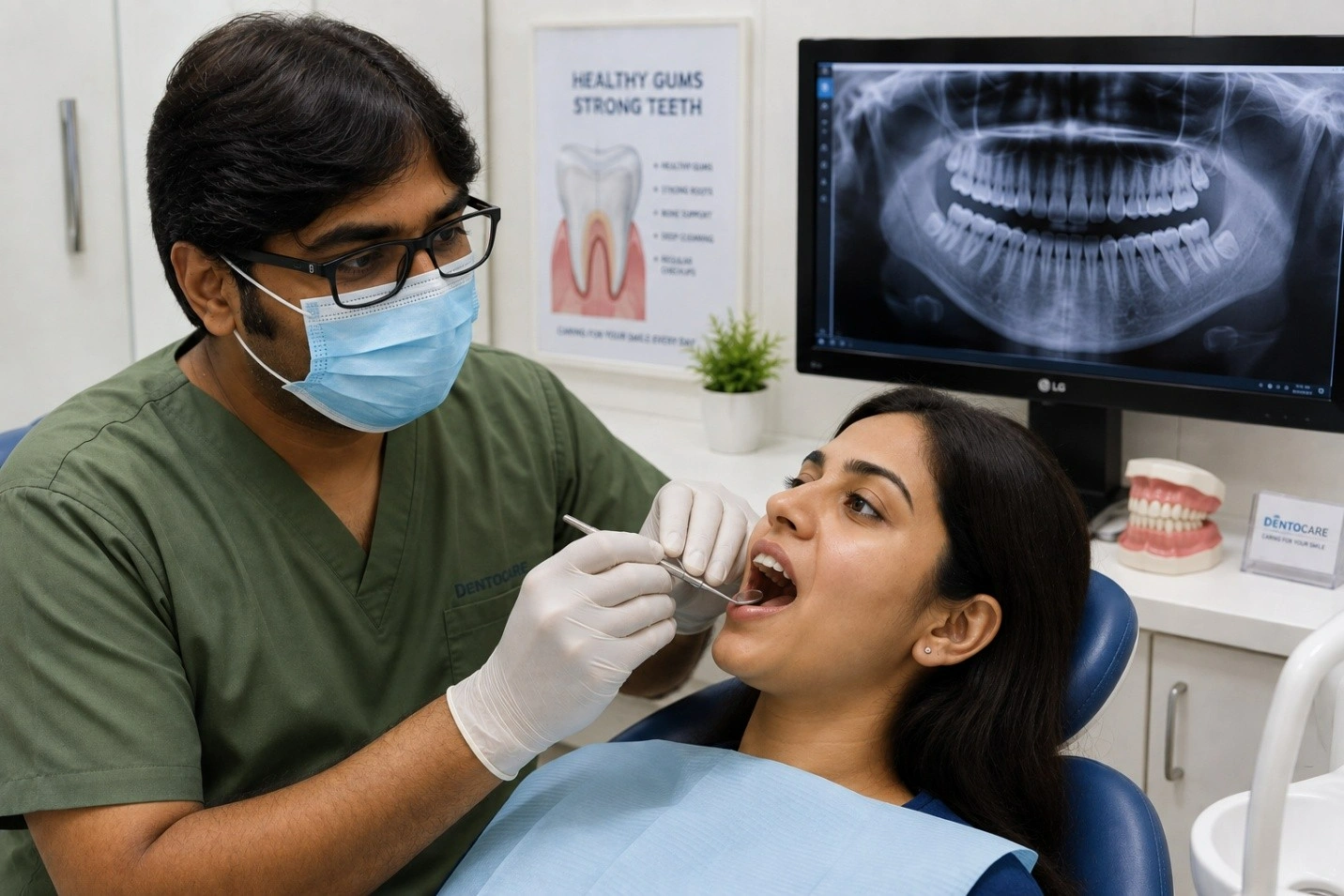
A dentist evaluates loose gums by examining the condition of your gums, teeth, and supporting structures. The diagnosis may include:
- Visual examination of gums
- Measuring gum pockets around teeth
- Dental X-rays to check bone support
- Checking tooth movement and stability
- Reviewing oral hygiene habits and medical history
These evaluations help determine the reason behind gum looseness and guide the appropriate treatment approach.
Treatment Options for Loose Gums Around Teeth
Treatment for loose gums depends on the cause and severity of the condition.
Professional Dental Cleaning
Professional cleaning procedures such as scaling and root planing help remove plaque and tartar buildup from the tooth surface and below the gumline.
Gum Disease Treatment
If gum disease is responsible for loose gums, treatment may involve deep cleaning, medication, or other periodontal procedures depending on the infection level.
Gum Grafting Procedure
For patients with significant gum recession, gum grafting may be recommended. This procedure helps restore lost gum tissue and protect exposed tooth roots.
Lifestyle and Oral Care Improvements
Maintaining good daily habits plays an important role in gum health. This includes brushing correctly, flossing regularly, avoiding tobacco, and attending routine dental check-ups.
Concerned About Loose Gums?
Don’t ignore bleeding, receding, or loose gums. Early care can help prevent further damage and protect your oral health. Consult an experienced dentist in Adyar for timely evaluation and appropriate treatment.
“Healthy gums create the foundation for strong teeth. Identifying gum problems early allows us to provide timely treatment and prevent further damage to the supporting tissues.”
— Dr. Phani Babu
How Can You Prevent Loose Gums Around Teeth?
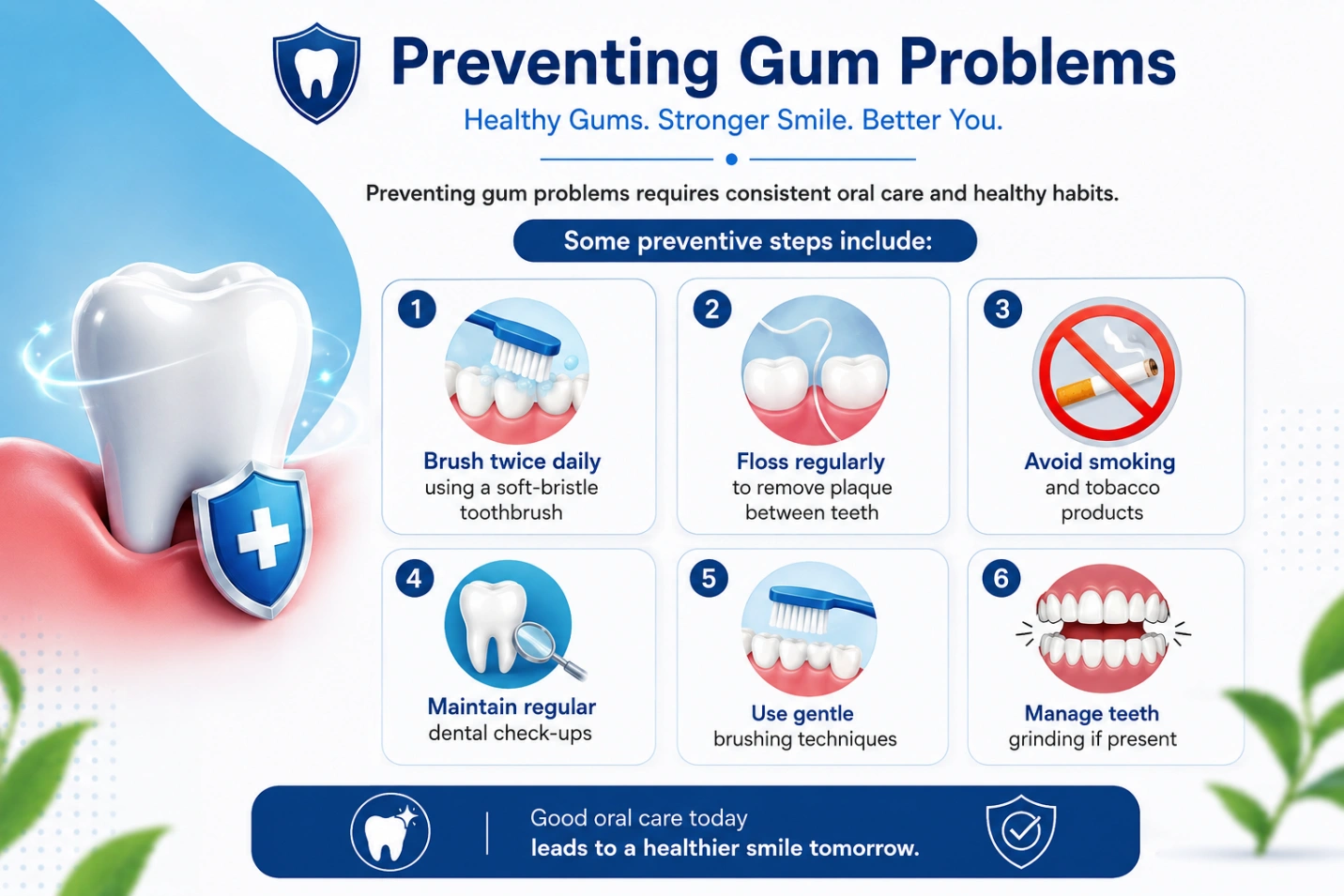
Small daily habits can make a significant difference in maintaining healthy gums and preventing future dental complications.
When Should You Visit a Dentist for Loose Gums?
You should consider visiting a dentist if you notice:
- Gums continuing to loosen or recede
- Teeth feeling shaky
- Persistent gum bleeding
- Pain or swelling around gums
- Increased tooth sensitivity
- Changes in the appearance of your gumline
Early dental evaluation can help identify the cause and prevent the condition from affecting your teeth and overall oral health.
“Loose gums should not be ignored because they may indicate changes in the tissues supporting your teeth. A proper dental evaluation helps identify the cause and determine the right approach for maintaining oral health.”
— Dr. Phani Babu
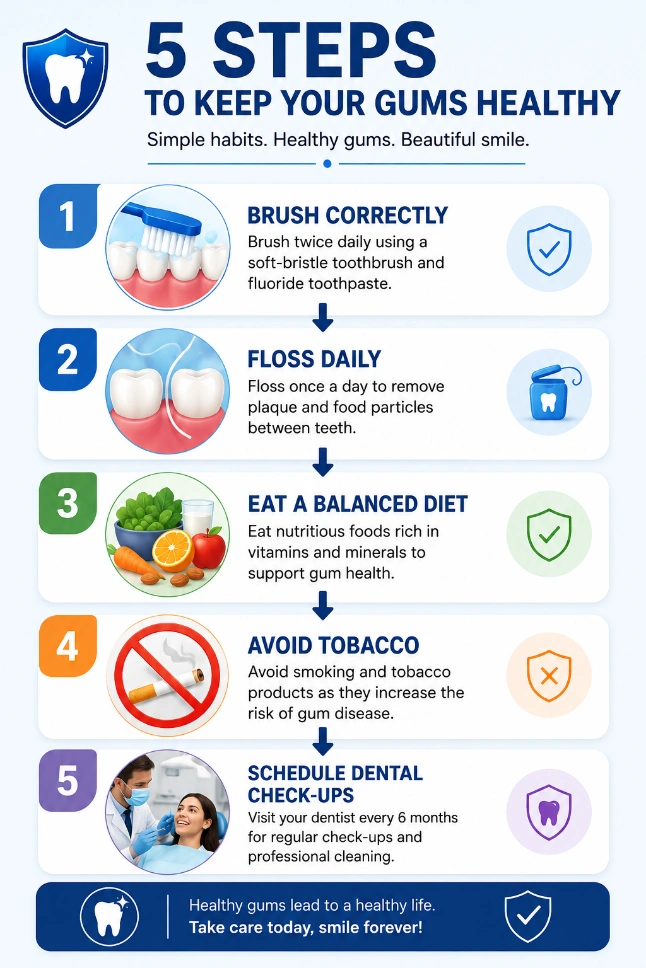
5 Steps to Keep Your Gums Healthy
This presents simple steps that support healthy gums. It provides readers with an easy routine to follow for reducing the risk of gum problems.
1. Brush Correctly
Brush twice daily with a soft-bristle toothbrush and fluoride toothpaste.
2. Floss Daily
Floss once a day to remove plaque and food particles between teeth.
3. Eat a Balanced Diet
Eat nutrient-rich foods to support healthy gums and strong teeth.
4. Avoid Tobacco
Avoid smoking and tobacco to reduce the risk of gum disease.
5. Regular Dental Check-ups
Visit your dentist every 6 months for professional cleaning and oral health check-ups.
Frequently Asked Questions
Why are my gums becoming loose around my teeth?
Loose gums around teeth can happen due to gum disease, plaque buildup, aggressive brushing, teeth grinding, tobacco use, or other factors that affect gum support.
Can loose gums grow back naturally?
Gum tissue usually does not grow back after significant loss. However, early treatment and proper oral care can help prevent further gum damage.
Are loose gums a sign of gum disease?
Yes, loose gums can be linked to periodontal disease, especially when symptoms include bleeding, swelling, bad breath, or tooth movement.
Can brushing too hard cause loose gums?
Yes. Applying too much pressure while brushing can damage gum tissue and contribute to gum recession.
What treatment is available for loose gums?
Treatment depends on the cause. Options may include professional cleaning, periodontal treatment, gum grafting, and improved oral care practices.
Take the First Step Towards Healthier Gums
If you’re experiencing loose gums, bleeding, or gum recession, visit a trusted dental clinic in Adyar for timely evaluation and appropriate treatment. Early care can help protect your gums and preserve your smile.