
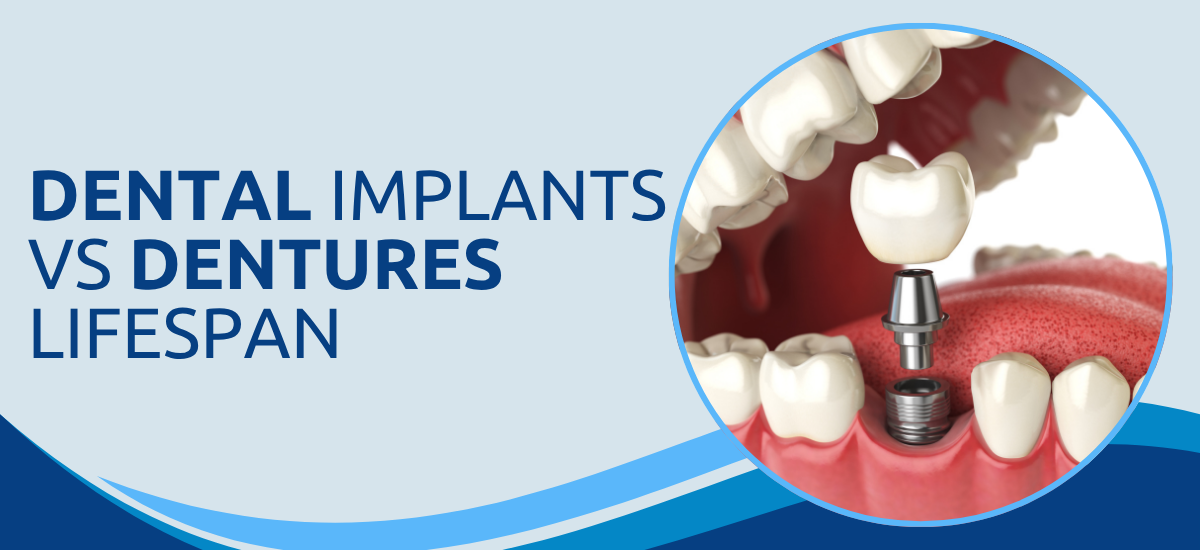
Dental implants last far longer than dentures. A well-placed implant can serve twenty-five years or even a lifetime, while conventional dentures usually need replacing every five to eight years. The reason sits in how each one works. Implants fuse into the jawbone and stay fixed, so they don’t shift or wear down the way removable dentures do. Dentures rest on the gums, and because the jaw keeps changing shape underneath them, they loosen and need relining or remaking over time. Longevity isn’t the only factor though. Cost, bone health, and daily habits all pull the decision in different directions.
According to Dr. Phani Babu of Dent Eazee, a leading Dental Clinic in Adyar, “an implant behaves like a natural root and protects the bone that holds it, which is exactly why it outlasts a denture that just sits on top of shrinking gum.”
Not sure whether your jawbone can even support an implant yet?
What Makes Implants Outlast Dentures?
The structural difference between fusing into bone and resting on gum decides how long each solution holds up.
Fusion: An implant bonds directly with the jawbone through osseointegration, giving it a stable anchor that resists the loosening dentures deal with constantly.
Bone health: Because implants stimulate the bone like a real root, they slow the shrinkage that keeps forcing dentures out of shape.
Wear: Dentures take a beating from daily chewing and cleaning, and the acrylic gradually thins, cracks, or stains no matter how careful you are.
Fit changes: And as gums recede under a denture, that once-snug fit turns wobbly, which is why relines and remakes keep coming.
So the material isn’t really the issue. It’s the foundation. A fixed tooth replacement built into bone simply has less working against it.
Do Dentures Ever Make More Sense Than Implants?
Longer lifespan doesn’t automatically make implants the right call for every single patient.
Bone loss: Patients with severe jawbone loss may need grafting before implants, whereas dentures can often go in without that extra surgical step.
Health: Certain conditions or heavy smoking slow implant healing, so a denture sometimes becomes the safer, more practical route.
Budget: Dentures cost less upfront, which matters when someone needs multiple teeth replaced and can’t manage implant fees all at once.
Speed: But dentures deliver a full smile quickly, often in weeks, while implants stretch across several months of healing.
Because the best option is the one that suits your bone, health, and timeline together. Curious what happens to the jaw when teeth go missing? Read our guide on jaw bone loss and explore how dental implants can help restore your smile.
Why Choose Dr. Phani Babu?
Dr. Phani Babu has years of focused experience placing implants and fitting full and partial dentures, and he assesses bone density before recommending either one. Patients arrive assuming implants are always the answer and leave with a plan built around their actual jaw.
His advice stays straight and practical. You’ll learn whether your bone can hold an implant today, needs grafting first, or whether a denture genuinely serves you better. Real options, no pressure.
FAQ
How long do dental implants usually last?
With good care, implants can last twenty-five years or even a lifetime.
How often do dentures need replacing?
Most dentures need relining or remaking every five to eight years.
Can I switch from dentures to implants later?
Yes, many patients upgrade to implants once their bone is assessed.
Are implants suitable for everyone?
No, severe bone loss or certain health issues can rule them out.
Refrences
- National Library of Medicine, Long-Term Survival of Dental Implants:
- World Health Organization, Oral Health:
Disclaimer: This content is intended for educational purposes only and should not replace a personal consultation with a qualified dental professional.