
Introduction: When a Filling Isn’t Enough
Some dental problems — a cracked tooth, severe decay, a tooth weakened after root canal treatment — need more than a filling can offer. That’s where crowns step in. If you’ve been looking into dental crowns in Adyar, this guide explains what they’re for, the materials available, what they cost, and why Dent Eazee stands out as the best dental clinic in Adyar for crown treatment.
At this trusted dental clinic in Adyar, the founding dentist leads a team known for restorative expertise across full mouth rehabilitation, implants, and crowns. You’ll find crowns listed among the clinic’s complete dental services, often working hand-in-hand with other restorative treatments.
What Are Dental Crowns?
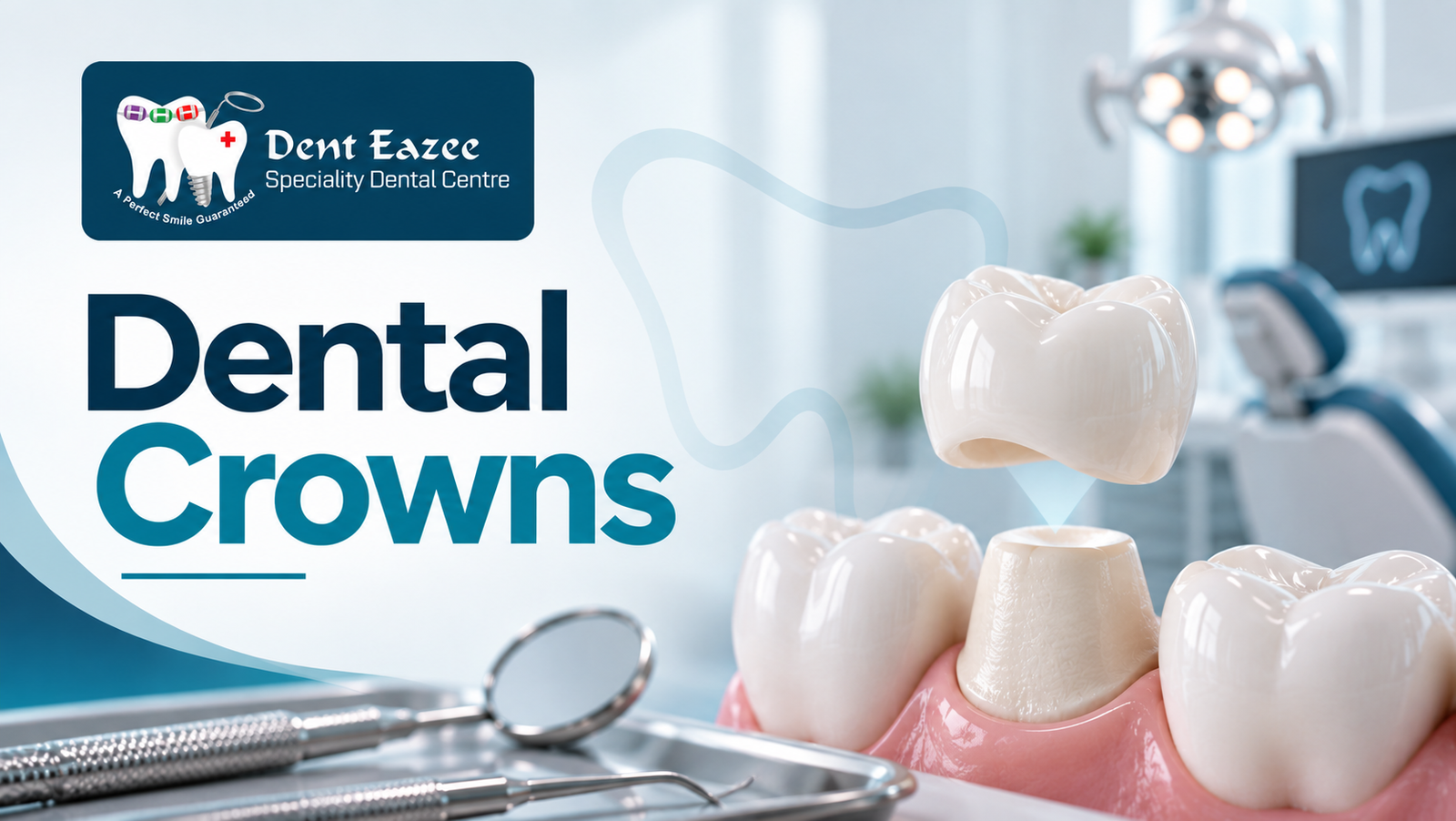
Dental crowns — often called “caps” — are custom-fitted tooth prosthetics that cover, protect, or restore the shape of a tooth when a filling alone won’t solve the problem. They can be made from porcelain, ceramic, metal, or a combination of materials, depending on the tooth’s location and the patient’s aesthetic priorities.
Why Are Dental Crowns Needed?
• Protecting a weak tooth from breaking, or holding together parts of a cracked tooth
• Restoring an already broken tooth or one with severe enamel erosion
• Covering and supporting a tooth with a large filling
• Holding a dental bridge securely in place
• Covering misshapen or discolored teeth
• Capping a dental implant
• Making a cosmetic modification for aesthetic goals
Crowns are also essential after root canal treatment, since removing the inner pulp of a tooth leaves it brittle and prone to fracture under normal chewing pressure.
Types of Dental Crowns
• Porcelain or Ceramic: Best for matching natural tooth color — ideal for front teeth.
• Gold Alloys: Durable and strong, typically used for back teeth.
• Porcelain Fused to Metal (PFM): Combines the durability of metal with the aesthetics of porcelain.
• Zirconia: Made from powdered ceramic — strong, natural-looking, and thinner than metal options.
• E-Max (Lithium Disilicate): Prized for its translucent color and close resemblance to real teeth.
The Dental Crown Treatment Process
• Initial Consultation and Evaluation: The dentist examines the tooth and surrounding gums, sometimes with a radiographic survey of the root and bone.
• Preparing the Tooth: Local anesthesia is given, the enamel is filed, and space is created for the crown; impressions are taken digitally or with dental putty.
• Placing a Temporary Crown: An acrylic temporary crown protects the tooth while the permanent one is fabricated.
• Creating the Permanent Crown: Impressions are sent to a dental lab, where the crown is crafted and color-matched over several weeks.
• Fitting the Permanent Crown: The temporary crown is removed, and the permanent one is checked for fit, color, and bite before being cemented in place.
• Post-Procedure Care: A follow-up visit confirms everything has settled properly, with guidance on brushing, flossing, and diet.
Benefits of Dental Crowns
• Restores Damaged Teeth: Provides anchorage and strength to decayed or eroded teeth.
• Enhances Aesthetic Appearance: Replaces discolored or misshapen teeth with a natural-looking result.
• Offers Durable Protection: Well-maintained crowns can last 5 to 15 years or longer.
• Covers Dental Implants: Serves as the final, functional step of the implant process.
Why Dent Eazee Is the Best Dental Clinic in Adyar for Crowns
• Expertise and Experience: The clinic’s lead dentist brings over 16 years of experience across a wide range of restorative procedures.
• Constant Innovation: The team regularly attends seminars to stay current on the latest crown materials and techniques.
• State-of-the-Art Technology: Advanced diagnostic tools support timely, accurate treatment planning.
• Comprehensive Services: Porcelain, ceramic, and metal crowns are all available in-house.
Crowns often work alongside other treatments — capping a dental implant, finishing a root canal treatment, or forming part of a broader cosmetic dentistry plan or full smile makeover. Patients undergoing a complete full mouth rehabilitation frequently need multiple crowns as part of the process. Those anxious about longer procedures can opt for sedation dentistry, while patients with gum concerns around a crowned tooth may also need laser gum surgery. If tooth grinding is a factor, bruxism treatment helps protect new crowns from premature wear, and patients missing several teeth may also explore dentures or dental fillings as complementary restorative options.
See real crown and smile transformations in the photo gallery, or read patient stories on the testimonials page.
Frequently Asked Questions
Can dental crowns improve sensitivity?
Yes — crowns can reduce sensitivity in teeth with worn enamel by acting as a protective barrier against triggering stimuli.
How do crowns interact with MRI scans?
Most porcelain, ceramic, or gold crowns are MRI-safe. Crowns containing metal alloys may need prior discussion with your radiologist.
Can you whiten dental crowns?
No — porcelain and ceramic crowns cannot be whitened like natural teeth, so it’s important to choose a shade you’ll be happy with long-term.
Do crowns protect against gum disease?
Crowns protect the tooth surface but not the gums or bone. Regular hygiene and check-ups remain essential.